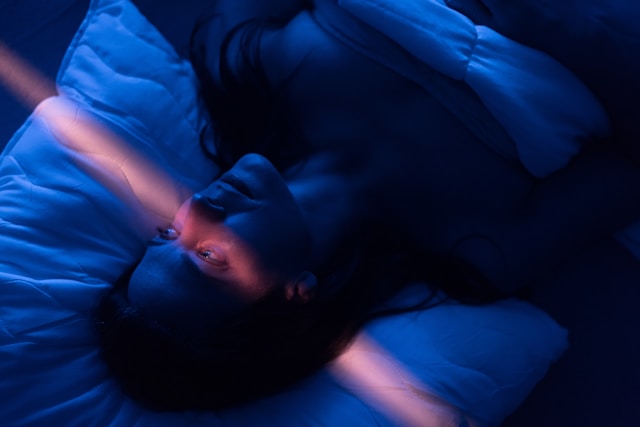


In this article, we explore parasomnias, night terrors, and trauma-related nightmares – while outlining practical, evidence-based strategies for clinicians.
Related articles: How to Sleep: Science-backed Tools and Strategies.
Jump to section
- Introduction
- When sleep disorders aren’t “just insomnia”
- Parasomnias and night terrors: What clinicians need to know
- Trauma and the sleeping brain
- Intervention spotlight: Imagery Rehearsal Therapy (IRT) and behavioural approaches
- Differential diagnosis and when to refer
- Collaborative care: Working alongside sleep specialists
- Key takeaways
- Questions therapists often ask
- References
- Appendix: Clinician quick guide
Introduction
When clients speak about sleep difficulties, the conversation often defaults – almost reflexively – to insomnia. Difficulty falling asleep, staying asleep, or waking too early are familiar clinical territory. Yet, for a subset of individuals, the problem is not sleeplessness but what happens during sleep itself.
Parasomnias, night terrors, and trauma-related nightmares can be profoundly distressing, frequently misunderstood, and easily mislabelled. Clients may present with fragmented recollections, unexplained fatigue, or even shame about behaviours they cannot fully recall. In some cases, they may not recognise that a sleep disorder is present at all.
For mental health professionals, the challenge lies not only in identifying these presentations but also in differentiating between them, understanding their links to trauma, and knowing when psychological intervention is appropriate – and when referral is essential.
This article offers a clinically grounded overview of sleep disorders beyond insomnia, with a focus on practical assessment, trauma-informed understanding, and evidence-based intervention strategies that sit comfortably within generalist practice.
When sleep disorders aren’t “just insomnia”
It is tempting to conceptualise sleep disturbance as a spectrum anchored by insomnia, but parasomnias represent a qualitatively different category. Rather than difficulties initiating or maintaining sleep, parasomnias involve undesirable physical or experiential events occurring during sleep (American Academy of Sleep Medicine [AASM], 2014).
Broadly, parasomnias are classified according to the sleep stage in which they occur:
- NREM parasomnias: including sleepwalking and night terrors
- REM parasomnias: including nightmares and REM sleep behaviour disorder
The distinction is clinically meaningful. NREM events typically occur in the first third of the night, are associated with minimal recall, and often involve confusion or disorientation. REM-related disturbances, by contrast, tend to occur later in the night and are vividly remembered (Howell, 2012; Stallman & Kohler, 2016).
Misinterpretation is common. Night terrors may be mistaken for nocturnal panic attacks; trauma-related nightmares may be minimised as “just bad dreams.” Without careful assessment, clinicians risk targeting the wrong mechanism – and therefore the wrong intervention.
Parasomnias and night terrors: What clinicians need to know
Parasomnias often sit at the intersection of neurology, sleep medicine, and psychology, but many cases first present in therapy rooms rather than sleep clinics.
Night terrors (sleep terrors) involve sudden arousals from deep sleep, often accompanied by intense fear, vocalisation, and autonomic activation (e.g., rapid heart rate, sweating). Unlike nightmares, individuals typically have little or no recall of the event (American Academy of Sleep Medicine, 2014; Stallman & Kohler, 2016).
Although commonly associated with childhood, night terrors in adults warrant closer attention. They are more likely to be linked with:
- Stress and emotional overload
- Trauma exposure
- Sleep deprivation
- Substance use
Case vignette
David, a 34-year-old paramedic, sought therapy for what he described as “night-time panic attacks.” He reported waking abruptly with a racing heart and a sense of dread, occasionally shouting or thrashing. However, he struggled to recall any specific dream content.
His partner described episodes occurring within the first two hours of sleep, during which David appeared disoriented and unresponsive to attempts at comfort. In session, David expressed frustration: “It feels like something is happening to me, but I can’t get a handle on it.”
A more detailed sleep history suggested NREM parasomnia rather than panic disorder. Exploration of occupational stress and cumulative trauma exposure became central to treatment, alongside psychoeducation about sleep cycles and safety planning.
Clinical pearl: When clients report intense nocturnal fear without clear dream recall, consider NREM parasomnias before concluding panic or nightmare disorder.
Trauma and the sleeping brain
Sleep is not a neutral state for individuals with trauma histories. It is a period during which the brain processes emotional memory – sometimes in ways that remain unresolved or dysregulated.
Trauma-related nightmares differ from idiopathic nightmares in several key ways:
- They often replicate or symbolically represent traumatic events
- They are associated with heightened physiological arousal
- They may contribute to avoidance of sleep altogether
Recent research highlights the role of disrupted REM sleep in PTSD, including altered emotional memory processing and impaired fear extinction (Raskind et al., 2018; Zhang et al., 2020). Contemporary reviews further suggest that nightmares actively contribute to the persistence of trauma symptoms by reinforcing fear networks and fragmenting sleep (Scarpelli et al., 2019; Biggs et al., 2020).
From a clinical standpoint, the key takeaway is this: nightmares are not merely symptoms – they can become maintaining factors. Clients may begin to fear sleep itself, leading to sleep restriction, hypervigilance, and worsening daytime functioning.
Cultural context also matters. In some communities, nightmares may be interpreted through spiritual or ancestral frameworks, which can influence help-seeking behaviour and the meaning attributed to symptoms. Sensitive inquiry can help clinicians integrate these perspectives without dismissing or pathologising them.
Dialogue snippet:
- Therapist: “When you wake from these dreams, what’s the first thing you notice in your body?”
- Client: “My heart. It’s pounding. Like I’m still there.”
- Therapist: “And how long does it take before you feel like you’re back in the present?”
- Client: “Sometimes… I’m not sure I ever fully do.”
Intervention spotlight: Imagery Rehearsal Therapy (IRT) and behavioural approaches
For trauma-related nightmares, Imagery Rehearsal Therapy (IRT) is one of the most accessible and evidence-supported psychological interventions (Casement & Swanson, 2012).
At its core, IRT involves helping clients consciously rewrite a distressing dream and rehearse the new version while awake.
Step-by-step outline:
- Psychoeducation. Normalise nightmares as modifiable mental events rather than fixed experiences.
- Dream selection. Choose a recurrent or particularly distressing nightmare.
- Rescripting. Collaboratively alter the narrative – reducing threat, increasing mastery, or introducing a neutral ending.
- Rehearsal. Client visualises the new version daily for 5–10 minutes.
- Integration. Track changes in dream frequency, intensity, and emotional impact.
The following brief worksheet can be used to guide clients through initial imagery rehearsal work.
Clinician worksheet: Imagery Rehearsal Therapy (IRT) Starter
Client Name:
Date:
1. Identifying the Dream
- Briefly describe the recurring or distressing dream:
- What is the most distressing part of the dream?
2. Emotional Impact
- What emotions do you feel during or after the dream?
☐ Fear ☐ Panic ☐ Helplessness ☐ Anger ☐ Other:
- How intense is the distress? (0–10):
3. Rewriting the Dream
Let’s change the dream in a way that feels safer, calmer, or more empowering.
- What would you like to be different?
- How does the new version end?
- What feeling would you prefer to have instead?
4. Rehearsal Plan
- How often will you practise imagining the new dream?
☐ Daily ☐ 3–4 times/week ☐ Other:
- When will you practise?
- Duration (5–10 minutes recommended):
5. Reflection (Next Session)
- Have there been any changes in your dreams?
- Changes in emotional intensity or sleep quality?
Clinician note: Emphasise that the goal is not to “analyse” the dream, but to change its emotional tone and perceived control. It is not about processing trauma content in depth, but changing the relationship to the dream.
Other behavioural supports may include:
- Sleep hygiene stabilisation
- Reducing pre-sleep hyperarousal
- Grounding techniques upon waking
A brief note on pharmacology: medications such as prazosin are sometimes prescribed for trauma-related nightmares, particularly in PTSD populations. Evidence suggests it may reduce nightmare frequency for some individuals, though outcomes vary across studies (Raskind et al., 2018; Zhang et al., 2020). Awareness of such treatments supports collaborative care.
Differential diagnosis and when to refer
Not all nocturnal disturbances should be managed within generalist mental health care. Some presentations require further medical or specialist evaluation.
Red flags for referral
- Injury risk (e.g., acting out dreams, leaving bed)
- Sudden onset in adulthood without clear stressor
- Possible seizures or atypical movements
- Severe daytime sleepiness despite adequate sleep duration
- Suspected sleep apnoea (e.g., snoring, gasping)
Distinguishing between parasomnias, dissociative episodes, panic, and neurological conditions is not always straightforward. Clinical guidance emphasises referral for polysomnography when behaviours are atypical, potentially dangerous, or diagnostically unclear (American Academy of Sleep Medicine, 2014; Stallman & Kohler, 2016).
Ethically, clinicians must remain within scope. Providing supportive intervention while facilitating appropriate referral reflects best practice – not inadequacy.
Collaborative care: Working alongside sleep specialists
Sleep disorders are rarely siloed. The most effective care often emerges from collaboration between mental health professionals, general practitioners, and sleep specialists.
Integrated care models highlight the interplay between behavioural, psychological, and physiological contributors to sleep disturbance, particularly in trauma-affected populations (Riemann et al., 2023; Biggs et al., 2020).
Generalist clinicians can confidently:
- Provide psychoeducation about sleep processes
- Address trauma-related components
- Implement behavioural interventions like IRT
- Support emotional regulation and coping
Sleep specialists, in turn, may:
- Conduct diagnostic sleep studies
- Identify physiological contributors
- Prescribe or adjust medication
Clear communication is key. A brief referral letter outlining observed symptoms, duration, and psychosocial context can significantly streamline care.
Clinical pearl: Think of sleep care as a shared ecosystem: psychological, physiological, and behavioural factors rarely operate in isolation.
Conclusion
Sleep disturbances beyond insomnia can be complex, unsettling, and easily overlooked – both by clients and clinicians. Yet, with thoughtful assessment and a grounded understanding of the underlying mechanisms, these presentations become far more navigable.
For mental health professionals, the task is not to become sleep specialists, but to recognise patterns, provide informed intervention, and collaborate where needed. In doing so, we help clients reclaim not only their nights, but the sense of safety and continuity that restorative sleep provides.
Key takeaways
- Not all sleep disturbances are insomnia; parasomnias involve events during sleep, not just difficulty sleeping.
- NREM parasomnias differ from REM-related disturbances in timing, recall, and presentation.
- Trauma-related nightmares can both reflect and maintain psychological distress.
- Imagery Rehearsal Therapy (IRT) is a practical, evidence-based intervention suitable for generalist clinicians.
- Pharmacological treatments may be part of care, underscoring the importance of interdisciplinary collaboration.
- Clear referral pathways are essential when presentations are complex or potentially medical in origin.
- Cultural meanings attached to dreams and sleep experiences should be explored with sensitivity.
- Psychoeducation can reduce shame and confusion for clients experiencing unusual sleep phenomena.
Questions therapists often ask
Q. How can I tell the difference between a nightmare and a night terror?
A. The key distinctions are timing, recall, and presentation. Nightmares typically occur during REM sleep (later in the night) and are vividly remembered, often with coherent storylines. Night terrors, by contrast, arise from deep NREM sleep (earlier in the night) and involve intense emotional arousal with little or no recall.
If a client says, “I wake up terrified but don’t know why,” consider a night terror. If they can describe the dream in detail, you’re likely working with a nightmare – potentially trauma-related if themes are recurrent or distressing.
Q. When should I treat nightmares psychologically, and when should I refer?
A. Psychological treatment is appropriate when nightmares are recurrent, distressing, and linked to identifiable emotional or trauma-related themes, especially when the client is otherwise medically stable.
Referral is indicated when there are red flags such as:
- Physical risk (e.g., acting out dreams, injury)
- Sudden onset without clear psychosocial context
- Suspicion of neurological issues or sleep apnoea
- Severe daytime impairment despite adequate sleep opportunity
A good rule of thumb: if the presentation feels unusual, unsafe, or unclear, collaboration or referral is the safer path.
Q. Do I need specialised training to use Imagery Rehearsal Therapy (IRT)?
A. Not necessarily. IRT is designed to be accessible to generalist clinicians, provided you understand its core principles and stay within scope.
The intervention is less about deep trauma processing and more about reshaping the dream narrative and reducing distress. Many therapists find it integrates naturally with CBT-informed or trauma-informed approaches.
That said, supervision or consultation is helpful when working with complex PTSD, dissociation, or highly distressing dream content.
Q. What if my client is afraid to go to sleep because of their nightmares?
A. This is more common than many clinicians realise. In these cases, the difficulty is no longer just the nightmare – it’s conditioned fear of sleep itself.
Treatment may need to proceed in stages:
- First, validate and normalise the fear
- Then, stabilise pre-sleep routines and reduce hyperarousal
- Introduce interventions like IRT gradually
- Reinforce a sense of safety and predictability around sleep
Avoid pushing directly into dream work if the client feels overwhelmed; pacing is key.
Q. How do I work respectfully with cultural or spiritual interpretations of nightmares?
A. Many clients understand nightmares through cultural, spiritual, or ancestral frameworks. Rather than challenging these interpretations, aim to explore their meaning and function.
You might ask:
- “What do you make of these dreams?”
- “Are there cultural or personal beliefs that help explain them?”
From there, you can gently integrate psychological strategies alongside these beliefs. The goal is not to replace meaning systems, but to expand the client’s sense of agency and coping.
References
- American Academy of Sleep Medicine. (2014). International classification of sleep disorders (3rd ed.).
- Biggs, Q. M., Ursano, R. J., Wang, J., Wynn, G. H., Carr, R. B., & Fullerton, C. S. (2020).
Post-traumatic stress symptom variation associated with sleep characteristics. BMC Psychiatry, 20, 174. https://doi.org/10.1186/s12888-020-02550-y - Casement MD, Swanson LM. A meta-analysis of imagery rehearsal for post-trauma nightmares: effects on nightmare frequency, sleep quality, and posttraumatic stress. Clin Psychol Rev. 2012 Aug;32(6):566-74. doi: 10.1016/j.cpr.2012.06.002. Epub 2012 Jun 30. PMID: 22819998; PMCID: PMC4120639.
- Howell, M. J. (2012). Parasomnias: An updated review. Neurotherapeutics, 9(4), 753–775. https://doi.org/10.1007/s13311-012-0143-8
- Raskind, M. A., Peskind, E. R., Chow, B., Harris, C., Davis‑Karim, A., Holmes, H. A., Hart, K. L., McFall, M., Mellman, T. A., Reist, C., Romesser, J., Rosenheck, R., Shih, M.-C., Stein, M. B., Swift, R., Gleason, T., Lu, Y., & Huang, G. D. (2018). Trial of prazosin for post-traumatic stress disorder in military veterans. The New England Journal of Medicine, 378(6), 507–517. https://doi.org/10.1056/NEJMoa1507598
- Riemann, D., Espie, C. A., Altena, E., Arnardottir, E. S., Baglioni, C., Bassetti, C. L. A., Bastien, C., Berzina, N., Bjorvatn, B., Dikeos, D., Dolenc Groselj, L., Ellis, J. G., Garcia-Borreguero, D., Geoffroy, P. A., Gjerstad, M., Gonçalves, M., Hertenstein, E., Hoedlmoser, K., Hion, T., … Spiegelhalder, K. (2023). The European Insomnia Guideline: An update on the diagnosis and treatment of insomnia 2023. Journal of Sleep Research, 32(6), e14035. https://doi.org/10.1111/jsr.14035
- Scarpelli, S., Bartolacci, C., D’Atri, A., Gorgoni, M., & De Gennaro, L. (2019). Mental sleep activity and disturbing dreams in the lifespan. International Journal of Environmental Research and Public Health, 16(19), 3658. https://doi.org/10.3390/ijerph16193658
- Stallman, H. M., & Kohler, M. (2016). Prevalence of sleepwalking: A systematic review and meta-analysis. PLoS ONE, 11(11), e0164769. https://doi.org/10.1371/journal.pone.0164769
- Zhang, Y., Ren, R., Sanford, L. D., et al. (2020). The effects of prazosin on sleep disturbances in PTSD: A systematic review and meta-analysis. Sleep Medicine, 67, 225–231. https://doi.org/10.1016/j.sleep.2019.07.026
Appendix: Clinician quick guide
This handout provides practical guidance for mental health professionals working with parasomnias, night terrors, and trauma-related nightmares. It is designed to support quick clinical decision-making.
How can I tell the difference between a nightmare and a night terror?
Nightmares occur during REM sleep (later in the night) and are vividly remembered. Night terrors occur during deep NREM sleep (earlier in the night), involve intense fear, and are usually not remembered.
When should I treat nightmares psychologically, and when should I refer?
Treat psychologically when nightmares are recurrent and linked to emotional or trauma themes. Refer if there is injury risk, sudden unexplained onset, suspected medical issues, or severe daytime impairment.
Do I need specialised training to use Imagery Rehearsal Therapy (IRT)?
IRT can be used by generalist clinicians with basic training. It focuses on rewriting distressing dreams rather than deep trauma processing. Seek supervision for complex trauma cases.
What if my client is afraid to go to sleep because of nightmares?
Address fear of sleep first. Stabilise routines, reduce hyperarousal, and introduce interventions gradually. Prioritise safety and pacing before deeper work.
How do I work respectfully with cultural or spiritual interpretations of nightmares?
Explore the client’s beliefs without challenging them. Integrate psychological strategies alongside their meaning systems to enhance agency and coping.