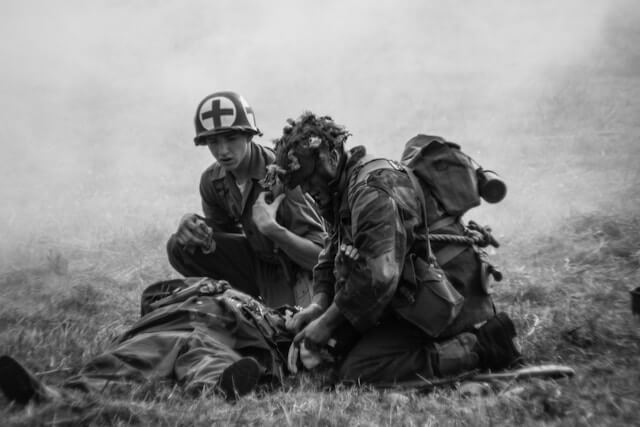


Moral injury is gaining recognition in helping professions, but many clinicians still struggle to identify and address it when clients feel they’ve violated their core values.
Related articles: Assessing and Treating PTSD, Case Study: Healing from Trauma as a Soldier, Trauma-Informed Practice: Fundamentals for Therapists.
Jump to section
- Introduction
- Moral injury is not the same as PTSD
- How moral injury presents across clinical populations
- Assessment considerations in everyday practice
- Working with shame, guilt, and betrayal themes
- Script box: What to say in session
- Treatment approaches that support repair
- Practical worksheet: Moral meaning exploration
- Therapist self-reflection prompt
- Key takeaways
- Questions therapists often ask
- References
Introduction
A client sits across from you and says quietly, “I know everyone tells me I did the right thing. But I still feel like I failed.”
They are not describing fear. They are describing moral pain.
Over the past decade, clinicians have increasingly recognised that some trauma-related suffering cannot be fully explained through traditional models of post-traumatic stress disorder (PTSD). Many clients instead struggle with a different constellation of experiences: persistent guilt, corrosive shame, anger at perceived betrayal, loss of faith in institutions, or a deep fracture in their sense of identity and purpose.
These experiences are now commonly described as moral injury – the psychological, social, and spiritual impact of events that violate deeply held moral beliefs or expectations (Litz et al., 2009; Griffin et al., 2019).
Originally studied in military populations, moral injury is now recognised across a range of professions where individuals must make ethically complex decisions under pressure – including healthcare workers, first responders, clergy, and humanitarian professionals (Koenig & Al Zaben, 2021).
For clinicians, the distinction matters. PTSD is typically organised around fear-based threat responses, whereas moral injury centres on guilt, shame, betrayal, and loss of meaning. If we conceptualise all trauma through a PTSD lens, we risk missing the very themes that are keeping the client stuck.
This article explores how to recognise moral injury in practice, differentiate it from PTSD, assess its core themes, and support clients through processes of moral repair and meaning reconstruction.
Moral injury is not the same as PTSD
The concept of moral injury refers to the psychological and existential consequences of exposure to potentially morally injurious events (PMIEs) – experiences that violate deeply held moral beliefs or expectations (Litz et al., 2009).
These events often involve one of three patterns:
- Perpetration: participating in actions that conflict with personal values
- Witnessing: observing others commit acts perceived as immoral
- Betrayal: feeling betrayed by leaders, institutions, or trusted others
Although moral injury frequently co-occurs with PTSD, the emotional core of the experience is different.
PTSD is typically driven by fear and threat processing, reflected in symptoms such as hyperarousal, startle responses, intrusive sensory memories, and avoidance of trauma reminders.
Moral injury, by contrast, often revolves around moral emotions: those of guilt, shame, anger or moral outrage, loss of trust, or spiritual or existential crisis. Clients may repeatedly revisit questions such as:
- “What kind of person does that make me?”
- “How could the people in charge allow this to happen?”
- “How do I live with what I did – or didn’t do?”
These questions reflect an injury not only to psychological safety, but to identity and moral meaning.
Case vignette
Daniel, a 34-year-old paramedic, sought therapy after leaving frontline work. During a mass-casualty incident, he had been forced to prioritise patients with the highest chance of survival. One critically injured child died while he attended to another patient.
Daniel did not report classic PTSD symptoms. He slept reasonably well and did not experience intrusive flashbacks. Yet he described overwhelming guilt and self-condemnation.
“I know the protocols,” he said. “I know I did what we’re trained to do. But I still feel like I abandoned that kid.”
Over time, Daniel withdrew from colleagues and avoided discussing the event with his family. He described feeling like a fraud whenever people thanked him for his work as a paramedic.
“I’m supposed to save people,” he told his therapist. “That’s the whole point of the job.”
Daniel’s distress centred not on fear, but on a perceived violation of his moral identity.
How moral injury presents across clinical populations
Although the concept emerged from military psychology, moral injury is now recognised in a variety of high-stakes professions.
Veterans
Veterans may experience moral injury following combat actions, failure to prevent harm, or perceived betrayal by military or political leadership. Feelings of guilt and shame may persist long after deployment, often contributing to social withdrawal and difficulties reintegrating into civilian life (Griffin et al., 2019).
Healthcare workers
Healthcare professionals may encounter moral injury when institutional constraints prevent them from providing care consistent with their ethical standards (Čartolovni et al., 2021). During the COVID-19 pandemic, many clinicians reported distress related to resource scarcity, triage decisions, and witnessing preventable suffering (Hines et al., 2021).
First responders
Police officers, firefighters, and paramedics frequently confront ethically complex situations requiring rapid decisions under pressure. Moral injury may arise when outcomes conflict with personal or professional values.
Clergy and spiritual leaders
Clergy may experience moral injury when institutional failures, ethical breaches, or community conflicts undermine their sense of vocation and moral purpose.
Case vignette
Maria, a 41-year-old intensive care nurse, sought therapy after the peak of the COVID-19 pandemic. She described repeatedly replaying moments when ventilators and ICU beds were unavailable.
“We were deciding who might live and who probably wouldn’t,” she said. “That’s not what nursing is supposed to be.”
Maria reported persistent anger toward hospital administrators whom she felt had ignored early warnings about staffing shortages.
“I’m proud of being a nurse,” she said quietly. “But now I’m not sure what that even means anymore.”
Her distress was not simply about trauma exposure – it reflected a profound rupture in her professional and moral identity.
Assessment considerations in everyday practice
Because moral injury is not currently a formal DSM diagnosis, clinicians typically identify it through careful clinical formulation. A useful starting point is to explore whether the client has experienced events that violated deeply held moral expectations.
Helpful assessment questions may include:
- “Was there a moment when you felt forced to act against your values?”
- “Did you ever feel unable to prevent harm that you believed should have been prevented?”
- “Did you feel betrayed by leaders, institutions, or trusted individuals?”
Clinicians should also assess common psychological themes associated with moral injury. For instance, the client may be experiencing persistent guilt or shame, or anger or moral outrage. They may also notice a sudden loss of trust in institutions or communities that they previously relied upon or believed in. Sometimes the moral injury expresses as a spiritual or existential struggle, where clients may suddenly question their most cherished values or beliefs. They may feel disoriented when those are challenged by events, as if someone pulled the metaphorical rug out from underneath them. Intense emotional or psychospiritual experiences such as these are often accompanied by the felt need to withdraw from meaningful relationships, and some clients may have thoughts of self-punishment or suicidality (Koenig, H. G., Youssef, N. A., & Pearce, M., 2019; Bryan et al., 2014).
Clinical red flags for moral injury
In practice, moral injury often reveals itself through distinctive language about morality, identity, and betrayal. Clinicians may wish to listen carefully for statements such as:
1. Global moral self-condemnation
“I’m not the kind of person I thought I was.”
2. Persistent responsibility for outcomes beyond control
“If I had done something different, they might still be alive.”
3. Loss of trust in leadership or institutions
“The people who were supposed to protect us abandoned us.”
4. Moral contamination or unworthiness
“I don’t deserve to move on from this.”
5. Collapse of professional or spiritual identity
“If this is what my job requires, I don’t know who I am anymore.”
When these themes dominate the narrative, clinicians may be encountering moral injury rather than – or alongside – fear-based trauma responses (Litz et al, 2009).
Emerging assessment measures include the Moral Injury Outcomes Scale (MIOS) and the Moral Injury Symptom Scale (MISS) (the civilian version is in the public domain), which can help quantify distress related to PMIEs (Koenig et al., 2018). However, structured instruments should complement – not replace – nuanced clinical interviewing.
Cultural context also matters. Moral frameworks differ widely across cultures, professions, and communities, shaping how individuals interpret morally complex events.
Working with shame, guilt, and betrayal themes
Differentiating guilt, shame, and betrayal is often central to treatment.
Guilt typically focuses on behaviour: “I did something wrong.”
Shame targets identity: “I am a bad person.”
When shame becomes global and entrenched, clients may withdraw socially, avoid seeking forgiveness, or engage in self-punishing behaviours (Tangney, Stuewig, & Mashek, 2007; Griffin et al., 2019).
Betrayal adds another dimension. Clients may feel deeply disillusioned with leaders, institutions, or communities that failed to uphold shared moral commitments.
Clinical pearl
Listen carefully for moral language. Words such as should, unforgivable, contaminated, or betrayed often signal moral injury themes that may not appear in traditional trauma assessments.
Dialogue example
Therapist: “When you think about what happened, what does it say about you as a person?”
Client: “That I’m not who I thought I was.”
Therapist: “And if that belief stayed exactly as it is now – what would it mean for your life going forward?”
Client: “It would mean I don’t deserve to move on.”
These exchanges often reveal the identity-level interpretations sustaining the injury.
Script box: What to say in session
When clients express moral injury themes, clinicians may find the following responses helpful, particularly when working from compassion-focused or integrative trauma approaches (Gilbert, 2014).
- Normalising moral conflict: “It sounds like the part of you that cares deeply about doing the right thing is also the part that’s hurting the most right now.”
- Exploring identity-level beliefs: “When you think about what happened, what story do you find yourself telling about the kind of person you are?”
- Separating behaviour from identity: “Can we look at the difference between what happened in that moment and what it says about your entire character?”
- Introducing compassion: “If someone you respected had been in the same situation, would you judge them the same way you judge yourself?”
- Opening space for moral complexity: “Sometimes the hardest situations force people to choose between imperfect options. What pressures were present for you in that moment?”
These prompts help move the conversation from self-condemnation toward reflection, responsibility, and moral integration.
Treatment approaches that support repair
No single gold-standard therapy currently exists for moral injury. Most experts recommend formulation-driven, integrative approaches (Griffin et al, 2023).
Recent research has begun to examine interventions designed specifically for moral injury. A growing body of work suggests that treatments addressing shame, moral identity, and self-forgiveness may be particularly important for recovery. For example, Griffin and colleagues (2023) found that veterans receiving moral-injury-informed therapy showed meaningful reductions in shame and guilt when treatment explicitly addressed responsibility, forgiveness, and moral repair rather than focusing exclusively on fear-based trauma processing.
Similarly, Worthington and Langberg (2012) highlight the therapeutic value of forgiveness and compassion-based interventions in moral injury treatment. These approaches aim to help clients acknowledge harm while moving away from global self-condemnation, supporting a shift from rigid moral judgment toward more balanced and humane self-understanding.
Together, these emerging findings reinforce a key clinical principle: moral injury recovery often requires reconstructing moral meaning, not simply extinguishing trauma-related fear responses.
Meaning reconstruction
Clients often need support to reconsider the meaning they have assigned to the event.
Therapeutic questions may include:
- “What values mattered most to you before the event?”
- “How were those values challenged?”
- “What would it look like to live those values now?”
This process can help shift the narrative from moral condemnation to moral complexity.
Compassion-focused work
Compassion-focused therapy (CFT) techniques can be particularly helpful when shame and self-criticism dominate the client’s experience (Gilbert, 2014). Clients can be led through compassionate imagery exercises. They can write letters to themselves (or others) from a compassionate perspective, and therapists can help them to develop an internal compassionate voice, as examples. These practices support emotional regulation and soften harsh self-judgment.
Self-compassion can be a scaffold upon which clients can build using acceptance and commitment techniques to come into relationship with the morally injurious event (Nieuwsma et al, 2015).
Trauma processing approaches
Some structured interventions – including Adaptive Disclosure – combine exposure to morally painful memories with opportunities for perspective-taking, forgiveness, and moral repair (Litz et al., 2009).
Reconnection and repair
Moral injury often disrupts relationships and community belonging. Recovery frequently involves reconnecting with others and re-engaging with meaningful roles or contributions.
Practical worksheet: Moral meaning exploration
Clinicians may invite clients to reflect on the following questions to explore how meaning has been shaped by the event (Park, 2010):
- What moral expectation was violated?
- What conclusion did you draw about yourself or others because of this event?
- Is there another interpretation that acknowledges the harm without condemning your entire identity?
The goal is not to minimise the moral weight of the event but to create a more balanced and humane narrative.
For clinicians, the practical question is rarely whether moral injury exists – but how to recognise it quickly and respond in ways that support moral repair rather than deepen shame. The following points summarise the essentials for practice.
Conclusion
Moral injury reminds us that trauma is not always about danger – it is often about values.
For many clients, the deepest suffering arises not from what they feared, but from what they believe the event reveals about their character, their profession, or the institutions they once trusted.
By recognising moral injury and responding with thoughtful formulation, compassion, and attention to moral meaning, clinicians can help clients move toward repair. The task is rarely to erase the moral weight of the event. Rather, it is to help individuals carry that weight in a way that allows them to remain connected to their values, relationships, and sense of humanity. In time, this is the work that may allow a client who once said “I feel like I failed” to begin telling a more compassionate and complex story about what happened.
Therapist self-reflection prompt
Work with moral injury can stir powerful responses in clinicians as well as clients. Feelings of anger at institutions, grief for preventable harm, or uncertainty about moral complexity may arise in the therapy room.
Before moving on from this topic, you might pause to consider:
- Which parts of this article resonated most strongly with your own clinical experience?
- Have you ever felt pulled toward judging a client – or yourself – too harshly when discussing morally complex events?
- How do you typically respond when clients describe situations where no option felt morally “right”?
- What helps you remain compassionate toward clients who are struggling with shame or self-condemnation?
Moral injury work often asks clinicians to sit with ambiguity, moral tension, and imperfect outcomes. Taking a moment to reflect on our own responses can help us remain grounded, curious, and compassionate when clients bring these difficult stories into the therapy room.
Key takeaways
- Moral injury is best understood as a disruption of moral identity rather than a purely fear-based trauma response.
- It often involves guilt, shame, betrayal, and loss of meaning rather than fear alone.
- Moral injury can occur across professions including military service, healthcare, emergency response, and religious leadership.
- Careful assessment should explore potentially morally injurious events and the client’s interpretation of those experiences.
- Differentiating guilt from shame is essential for effective treatment planning.
- Compassion-focused interventions and meaning reconstruction may help address entrenched self-condemnation.
- Recovery often involves rebuilding trust, identity, and community connection.
Questions therapists often ask
Q: How can I tell whether a client is experiencing moral injury rather than PTSD?
A: Although moral injury and PTSD often occur together, the emotional centre of the client’s distress is usually different. PTSD is typically organised around fear and threat responses, such as hyperarousal, intrusive memories, and avoidance of trauma reminders. Moral injury, by contrast, tends to revolve around moral emotions – particularly guilt, shame, anger, or betrayal.
Clinicians may notice that the client repeatedly questions their character, identity, or values rather than focusing primarily on danger or safety. Statements such as “What kind of person does that make me?” or “I don’t deserve to move on from this” often signal that the client’s suffering is rooted in moral meaning rather than fear-based trauma alone.
Q: What if the client really did cause harm – how should I respond without minimising responsibility?
A: key therapeutic task in moral injury work is helping clients differentiate responsibility from global self-condemnation. Therapy does not require denying harm or avoiding difficult moral realities. Instead, clinicians can support clients to examine the context in which decisions occurred, including the pressures, constraints, and limited options present at the time.
The goal is to move from rigid moral judgment toward a more balanced understanding that acknowledges harm without collapsing the client’s entire identity into that moment. Compassion, accountability, and moral reflection can coexist within the therapeutic process.
Q: Should I use trauma-processing approaches such as exposure if the client is struggling with moral injury?
A: Trauma-processing approaches can still be helpful, particularly when moral injury co-occurs with PTSD. However, fear-based trauma processing alone may not address the central themes sustaining the client’s distress.
Effective treatment often requires additional work focused on shame, moral identity, self-forgiveness, and meaning reconstruction. Approaches such as compassion-focused therapy, acceptance and commitment therapy, or interventions designed specifically for moral injury (e.g., Adaptive Disclosure) can help clients integrate the event into a more humane and complex narrative about themselves and their values.
Q: What if a client feels angry or betrayed by institutions or leadership?
A: Betrayal is a common dimension of moral injury. Clients may feel deeply disillusioned with organisations or authorities that failed to uphold shared ethical commitments. These reactions often reflect a loss of trust that extends beyond the original event.
In therapy, it can be helpful to acknowledge the legitimacy of these reactions while exploring how the client wants to relate to those experiences going forward. This may involve processing grief, redefining professional identity, or reconnecting with values that exist independently of the institution involved.
Q: How can I support moral repair if the client believes they do not deserve forgiveness?
A: Clients experiencing moral injury frequently struggle with the belief that moving forward would mean excusing or forgetting what happened. In therapy, clinicians can help clarify that moral repair does not require denying responsibility or erasing the past.
Instead, repair often involves developing a more compassionate and integrated understanding of the event, reconnecting with core values, and finding meaningful ways to live in alignment with those values now. Over time, this process can allow clients to carry the moral weight of the experience without remaining defined by it.
References
- Bryan, A. O., Bryan, C. J., Morrow, C. E., Etienne, N., & Ray-Sannerud, B. (2014). Moral injury, suicidal ideation, and suicide attempts in a military sample. Traumatology, 20(3), 154–160. https://doi.org/10.1037/h0099852
- Čartolovni A, Stolt M, Scott PA, Suhonen R. Moral injury in healthcare professionals: A scoping review and discussion. Nurs Ethics. 2021 Aug;28(5):590-602. doi: 10.1177/0969733020966776. Epub 2021 Jan 11. PMID: 33427020; PMCID: PMC8366182.
- Gilbert, P. (2014). The origins and nature of compassion focused therapy. British Journal of Clinical Psychology, 53(1), 6–41. https://doi.org/10.1111/bjc.12043
- Griffin BJ, Purcell N, Burkman K, Litz BT, Bryan CJ, Schmitz M, Villierme C, Walsh J, Maguen S. Moral Injury: An Integrative Review. J Trauma Stress. 2019 Jun;32(3):350-362. doi: 10.1002/jts.22362. Epub 2019 Jan 28. PMID: 30688367.
- Griffin, B. J., Weber, M. C., Hinkson, K. D., Jendro, A. M., Pyne, J. M., Smith, A. J., Usset, T., Cucciare, M. A., Norman, S. B., Khan, A., Purcell, N., & Maguen, S. (2023). Toward a dimensional contextual model of moral injury: A scoping review on healthcare workers. Current Treatment Options in Psychiatry, 10(3), 199–216. https://doi.org/10.1007/s40501-023-00296-4
- Hines, S. E., Chin, K. H., Glick, D. R., & Wickwire, E. M. (2021). Trends in Moral Injury, Distress, and Resilience Factors among Healthcare Workers at the Beginning of the COVID-19 Pandemic. International Journal of Environmental Research and Public Health, 18(2), 488. https://doi.org/10.3390/ijerph18020488
- Koenig HG, Al Zaben F. (2021). Moral Injury: An Increasingly Recognized and Widespread Syndrome. Journal of Religion and Health. 2021 Oct;60(5):2989-3011. doi: 10.1007/s10943-021-01328-0. Epub 2021 Jul 10. PMID: 34245433; PMCID: PMC8270769.
- Koenig HG, Ames D, Youssef NA, Oliver JP, Volk F, Teng EJ, Haynes K, Erickson ZD, Arnold I, O’Garo K, Pearce M. The Moral Injury Symptom Scale-Military Version. Journal of Religion and Health. 2018 Feb;57(1):249-265. doi: 10.1007/s10943-017-0531-9. PMID: 29196962.
- Koenig HG, Youssef NA, Pearce M. Assessment of Moral Injury in Veterans and Active Duty Military Personnel With PTSD: A Review. Frontiers in Psychiatry. 2019 Jun 28;10:443. doi: 10.3389/fpsyt.2019.00443. PMID: 31316405; PMCID: PMC6611155.
- Litz, B. T., Stein, N., Delaney, E., Lebowitz, L., Nash, W. P., Silva, C., & Maguen, S. (2009). Moral injury and moral repair in war veterans. Clinical Psychology Review, 29(8), 695–706. https://doi.org/10.1016/j.cpr.2009.07.003
- Nieuwsma, J. A., Walser, R. D., Farnsworth, J. K., Drescher, K. D., Meador, K. G., & Nash, W. P. (2015). Possibilities within acceptance and commitment therapy for approaching moral injury. Current Psychiatry Reviews, 11(3), 193–206. https://doi.org/10.2174/1573400511666150629105234
- Park, C. L. (2010).
Making sense of the meaning literature: An integrative review of meaning making and its effects on adjustment to stressful life events. Psychological Bulletin, 136(2), 257–301.
https://doi.org/10.1037/a0018301 - Tangney, J. P., Stuewig, J., & Mashek, D. J. (2007).
Moral emotions and moral behavior. Annual Review of Psychology, 58, 345–372.
https://doi.org/10.1146/annurev.psych.56.091103.070145 - Worthington, E. L., Jr., & Langberg, D. (2012). Religious considerations and self-forgiveness in treating complex trauma and moral injury in present and former soldiers. Journal of Psychology and Theology, 40(4), 274–288. https://doi.org/10.1177/009164711204000403