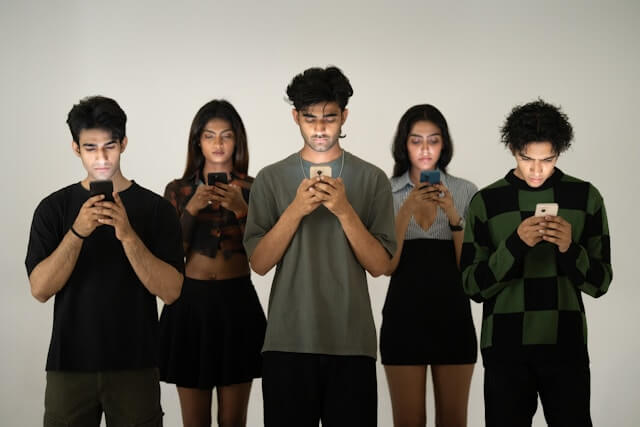


Does social media harm teen mental health? This evidence-based guide covers the risks, benefits, clinical assessment, and effective clinical interventions.
Related articles: Understanding Adverse Childhood Experiences (ACEs), Ethical Use of Social Media in Mental Health Practice.
Jump to section
- Introduction
- What the strongest evidence actually says
- Moving beyond “screen time”: Mechanisms that matter
- What about the positive side?
- A practical assessment framework for clinicians
- Interventions that show promise
- Ethical, cultural and developmental considerations
- So, do the negative impacts outweigh the positive?
- Key takeaways
- Questions therapists often ask
- References
Introduction
Social media is now woven into adolescent development. For many teenagers, friendships, identity exploration, humour, romantic interest, peer status, activism, conflict, comparison and support all occur partly online. That makes the clinical question more complex than “Is social media bad for teens?” A more useful question is: Which young people, using which platforms, in which ways, at which developmental moments, with what offline supports, are more likely to be harmed or helped?
The current evidence base does not support a simplistic panic narrative. Large-scale studies often find small average associations between digital technology use and adolescent wellbeing (Orben & Przybylski, 2019; Valkenburg et al., 2022). At the same time, “small average effect” does not mean “clinically irrelevant”. Average effects can conceal vulnerable subgroups, specific risk pathways and developmental timing effects. More recent longitudinal and meta-analytic evidence suggests that certain patterns of social media use are meaningfully associated with depressive symptoms, internalising problems, sleep disruption, cyberbullying, body dissatisfaction and compulsive use in some adolescents (Kelly et al., 2019; Marciano et al., 2024; Nagata et al., 2025).
For mental health professionals, the answer is neither alarmism nor shrugging. Social media should be assessed as a clinically relevant developmental context, much like sleep, school, family functioning, peer relationships, substance use or trauma exposure. The task is not to demonise online life, but to understand how it is functioning in a young person’s emotional ecology.
What the strongest evidence actually says
The field has suffered from noisy debate because “screen time” is a blunt construct. It collapses messaging a supportive friend, watching short-form videos at 1:00 am, receiving cyberbullying messages, posting creative work, viewing self-harm content and participating in an identity-affirming peer community into the same bucket. That is clinically useless.
One influential large-scale analysis by Orben and Przybylski (2019) examined three large datasets involving more than 355,000 adolescents and found that digital technology use had a negative but very small association with adolescent wellbeing, explaining at most 0.4% of variation. Their finding is important because it challenges claims that digital technology exposure alone explains broad declines in adolescent mental health.
However, more targeted evidence complicates the picture. In a systematic review and meta-analysis of 143 studies involving more than one million adolescents, Marciano et al. (2024) found small but significant positive associations between social media use and internalising symptoms across both clinical and community samples. The authors also noted that only a small minority of studies focused on clinical populations, which limits confidence when applying population-level findings to adolescents already presenting with anxiety, depression, eating disorders, trauma, self-harm or neurodevelopmental complexity.
Longitudinal findings remain mixed. Coyne et al. (2020), in an eight-year longitudinal study of adolescents, found that time spent using social media was not associated with later depression or anxiety when examined at the intra-individual level. By contrast, Boers et al. (2019) found that increases in social media and television use were associated with increases in depressive symptoms over time, with findings consistent with upward social comparison and reinforcing spirals. More recently, Nagata et al. (2025), using data from the Adolescent Brain Cognitive Development Study, found that higher-than-usual social media use in early adolescence predicted higher depressive symptoms in the subsequent year, while depressive symptoms did not predict later increases in social media use.
The most defensible conclusion is this: social media is unlikely to be the sole or dominant cause of adolescent mental health problems at a population level, but specific patterns of use are credible, modifiable risk factors for some young people. Clinically, that is enough to justify routine assessment and targeted intervention.
Moving beyond “screen time”: Mechanisms that matter
The strongest clinical evidence points away from total hours and toward mechanisms. For practitioners, the question is not simply “How much social media?” but “What is this use doing to sleep, mood, identity, relationships, safety, and functioning?”
Sleep disruption and night-time use
Sleep is one of the clearest pathways through which social media may affect mental health. Kelly et al. (2019), using data from more than 10,000 14-year-olds in the UK Millennium Cohort Study, found that social media use was associated with depressive symptoms, with pathways including poor sleep, online harassment, low self-esteem, and body image concerns. The association was particularly pronounced among girls, although boys were not unaffected.
Clinically, the key distinction is not merely duration. A teenager who spends two hours after school messaging close friends may be in a different risk category from a teenager who spends 45 minutes after midnight scrolling appearance-focused content, checking whether they have been excluded from a group chat, or monitoring whether someone has replied.
Night-time social media use can delay sleep onset, fragment sleep through notifications, increase emotional arousal and create a pattern in which the adolescent wakes already depleted. Since poor sleep is itself a risk factor for depression, anxiety, emotional dysregulation and impaired school functioning, bedtime media use deserves direct assessment.
Clinical pearl: Treat phone access after bedtime as a sleep and emotion-regulation issue, not as a moral failure. The clinical target is circadian protection, downshifting and reduced nocturnal social threat monitoring.
Social comparison, body image and appearance-based content
Highly visual platforms can intensify upward comparison. Adolescents may compare their unfiltered, ordinary, uncertain selves with curated images of beauty, popularity, fitness, romance, lifestyle and success. For young people with perfectionism, eating-disorder vulnerability, social anxiety, identity insecurity or low self-worth, this can become clinically potent.
Boers et al. (2019) found support for upward social comparison as one explanatory pathway linking screen-based activities and depressive symptoms. Kelly et al. (2019) also identified body image and self-esteem as important pathways between social media use and depressive symptoms. The American Psychological Association (2026) advises that adolescents’ social media use should be developmentally tailored and that exposure to content promoting disordered eating, self-harm, hate, discrimination or maladaptive comparison should be reduced.
For clinicians, this means asking about the felt effect of content. “Do you feel more yourself after using this app, or less?” is often more revealing than “How long were you online?”
Cyberbullying, harassment and peer exclusion
Online peer harm is not less real because it occurs through a device. It can be persistent, public, anonymous, screenshot-able and difficult to escape. It may continue after school, follow the adolescent into bed and involve an audience much larger than traditional peer conflict.
Kelly et al. (2019) identified online harassment as one pathway linking social media use and depressive symptoms. Nesi (2020) also highlights that social media changes the nature of peer interaction by increasing availability, permanence, publicness and quantifiability. A humiliating comment, exclusion from a group chat, manipulated image, coercive request or public ranking can carry significant psychological force.
Clinicians should avoid relying only on the word “bullying”. Many adolescents will not label their experience that way. They may instead describe being removed from group chats, left on read, mocked in private stories, impersonated, pressured for images, screenshotted, subtweeted, excluded from events, or targeted through anonymous question tools.
Problematic or compulsive use
Problematic social media use is not simply high use. It involves loss of control, preoccupation, functional impairment, distress when unable to access the platform, and continued use despite negative consequences. For some adolescents, social media becomes a primary strategy for avoidance, reassurance seeking, numbing, social surveillance, or emotion regulation.
This matters clinically because removing access without addressing the function often produces conflict rather than change. A young person using social media to avoid panic, loneliness, family conflict, or shame will need replacement strategies, not just restrictions. Otherwise, the intervention removes the coping strategy without treating the need it was serving.
A useful formulation question is: “What job is social media doing for this young person?”
What about the positive side?
A balanced article must take the benefits seriously. Social media can support friendship maintenance, identity exploration, creativity, humour, civic engagement, help-seeking and access to psychoeducation. For some young people, online spaces provide forms of support unavailable offline.
This may be particularly important for LGBTQIA+ adolescents, neurodivergent young people, young people with chronic illness, rural or geographically isolated youth, culturally minoritised adolescents and those with niche interests or stigmatised experiences. Nesi (2020) argues that social media creates both challenges and opportunities, including risks from harmful content and peer comparison, but also potential benefits through social connection, self-expression and access to resources.
The positive evidence, however, is generally less specific and less mature than the risk evidence. We have clearer evidence that sleep disruption, cyberbullying, and appearance-based comparison can be harmful than we have evidence that ordinary social media use reliably improves mental health. The clinical goal should therefore be selective optimisation: reduce harmful use, preserve genuinely supportive use, and help adolescents build agency over their digital environments.
Case vignette: From “phone addiction” to clinical formulation
Maya, 15, is referred for worsening anxiety, low mood and school refusal. Her parents describe her as “addicted to TikTok and Instagram” and want the clinician to tell her to delete everything. Maya initially says social media is “the only thing that helps”.
A detailed assessment tells a more useful story. Maya spends most afternoons messaging two close friends, which she experiences as supportive. The highest-risk period is 10:30 pm to 1:00 am, when she scrolls appearance-focused videos, checks whether peers have posted photos from gatherings she was not invited to, and searches fitness and “clean eating” content. She reports going to sleep “angry and disgusting”, then waking late, missing breakfast and arguing with her mother. She also discloses that a peer has been making indirect comments about her body online.
The intervention does not begin with a total ban. Instead, Maya and her parents agree to a two-week experiment: phone charging outside the bedroom, notifications off after 9:30 pm, unfollowing appearance-triggering accounts, tracking mood before and after app use, and replacing late-night scrolling with a downshift routine of shower, music and one supportive message to a friend before 9:45 pm. Therapy also addresses body comparison, peer exclusion, and assertive help-seeking at school.
The phone was part of the problem, but not the whole problem. The formulation identified when, how, and why social media became harmful.
A practical assessment framework for clinicians
Social media assessment can be integrated into ordinary biopsychosocial formulation. The following domains are more clinically useful than simply asking about hours.
Pattern
Ask which platforms the adolescent uses, when they use them, and what they are usually doing. Distinguish direct messaging, passive scrolling, posting, short-form video consumption, image-based browsing, fandom, gaming-adjacent communities, activism, anonymous forums, and school-related groups.
Function
Ask what social media helps the adolescent get, avoid, prove, or regulate. Common functions include soothing, numbing, belonging, distraction, reassurance, comparison, status management, and surveillance of peers.
Emotional aftertaste
Ask: “When you close the app, do you usually feel better, worse, calmer, more anxious, connected, excluded, or just blank?” This helps differentiate restorative connection from compulsive or dysregulating use.
Sleep and body rhythms
Assess bedtime access, night waking, notifications, morning fatigue, meal disruption, exercise displacement, and family conflict. The American Academy of Pediatrics (2024) recommends personalised family media planning rather than one-size-fits-all rules.
Harmful content and contact
Screen for self-harm content, eating-disorder content, sexual coercion, image-based abuse, cyberbullying, discrimination, hate, gambling-like reward loops, extremist content, and adult contact. Escalate when there is suicidal ideation, coercion, threats, exploitation, severe sleep disruption, or significant deterioration in eating, school attendance, or functioning.
Protective online use
Ask: “Where online do you feel genuinely supported, creative, informed or like yourself?” This prevents the assessment from becoming a one-way interrogation about risk.
Interventions that show promise
Sleep-first media planning
For many adolescents, the highest-yield intervention is protecting sleep. This may include charging devices outside the bedroom, disabling notifications, using app limits after a set time, creating a family-wide digital sunset, or replacing late-night scrolling with a predictable regulation routine.
The frame matters. “We are protecting your brain’s recovery system” will usually land better than “You are addicted to your phone.” The latter invites defensiveness; the former creates a shared clinical target.
A useful script:
“I’m not asking whether social media is good or bad. I’m asking whether your brain gets a fair chance to recover at night. Let’s run this as a two-week experiment and track mood, sleep, energy, and conflict.”
Feed restructuring and algorithmic hygiene
Clinicians can help adolescents conduct a “feed audit”. The goal is to identify content that worsens shame, anxiety, anger, exclusion, or compulsive checking, and to intentionally increase content that supports values, creativity, humour, learning, identity, or healthy connection.
A simple worksheet:
Social Media Audit
- Platform I use most:
- Three accounts or content types that usually worsen my mood:
- Three accounts or content types that support my wellbeing or values:
- What I notice in my body after scrolling:
- What I will mute, unfollow, restrict or block:
- What I will intentionally add:
- One no-phone zone:
- One no-phone time:
- One person who can help me stick to this:
- What we will review in two weeks:
This intervention is clinically coherent because it targets content, affect and agency, rather than relying only on blunt time limits.
Body image and social comparison work
For young people affected by appearance-based comparison, clinicians can combine cognitive, compassion-focused, and media-literacy strategies. Help adolescents identify the comparison loop: trigger, content, thought, body sensation, behaviour, and after-effect.
A practical therapist prompt:
“Let’s separate what you saw from what your brain concluded. The post showed an edited image. Your brain concluded, ‘I am behind, ugly, and unwanted.’ That conclusion deserves examination.”
Media-literacy work should include filters, lighting, posing, editing, sponsorship, selective posting, algorithmic amplification and the economics of attention. For eating-disorder risk, feed changes may need to be incorporated into safety planning and relapse prevention.
Cyberbullying and online harm response planning
A cyberbullying plan should be concrete and rehearsed before crisis escalates:
- Preserve evidence through screenshots.
- Avoid retaliating while emotionally escalated.
- Block, mute, or restrict where appropriate.
- Report through platform and school channels.
- Identify one calm adult who will help.
- Assess self-harm risk, school refusal, and safety.
- Involve caregivers without automatically removing all autonomy from the young person.
The clinician’s stance should be validating and practical: online harm is real, and the adolescent should not have to solve it alone.
Strengthening offline anchors
The best social media intervention is sometimes offline. Sleep, exercise, family connection, school belonging, hobbies, in-person friendships, cultural connection, and meaningful competence all reduce over-reliance on platforms for regulation and self-worth.
This is not because offline life is inherently pure and online life is inherently toxic. It is because adolescents need multiple sources of identity, reward, and belonging. A teen whose only reliable access to status, soothing, or connection occurs through social media is more vulnerable when that environment becomes hostile or compulsive.
For depressed or anxious adolescents, behavioural activation can include “connection before consumption”: message a friend to arrange something, walk outside, practise music, cook, train, volunteer, create something, or join a structured activity before passive scrolling.
Collaborative family agreements
Parent-only control often fails with teenagers because it invites secrecy, workarounds, and power struggles. A better approach is collaborative and developmentally staged. Parents can set non-negotiables around safety and sleep while giving adolescents some choice around platforms, privacy, and positive use.
A family agreement might include:
- No phones in bedrooms overnight.
- No punitive confiscation for disclosing online harm.
- Parents ask before checking private messages unless safety is at risk.
- The adolescent agrees to seek help for coercion, threats, self-harm content, or bullying.
- Family members observe phone-free meals or car rides.
- The plan is reviewed monthly, not weaponised during conflict.
The American Psychological Association (2026), American Academy of Pediatrics (2024) and U.S. Surgeon General (2023) all emphasise developmentally appropriate adult involvement, youth skill-building, and safer digital environments rather than relying solely on individual willpower.
Ethical, cultural, and developmental considerations
Clinicians should avoid assuming that all families have the same digital norms, risks or resources. For some adolescents, online communities are a crucial source of belonging. For LGBTQIA+ youth, privacy around online identity exploration may be protective. For neurodivergent adolescents, online communication may reduce social load and allow more controlled interaction. For adolescents exposed to racism, ableism, homophobia, transphobia or other forms of discrimination online, clinicians should name discrimination as a real stressor rather than framing distress as merely “too much screen time”.
Confidentiality also matters. Young people may avoid disclosing online risks if they believe the automatic consequence will be surveillance or phone removal. Clinicians can clarify limits without becoming digital police:
“I’m not here to inspect everything on your phone. I do need to act if someone is exploiting you, threatening you, pressuring you sexually, or if your safety is at risk.”
Developmental stage should also shape intervention. Younger adolescents may need more scaffolding and stronger environmental boundaries. Older adolescents need increasing autonomy, collaborative problem-solving, and explicit preparation for independent digital self-management.
So, do the negative impacts outweigh the positive?
At the population level, the evidence does not justify saying that social media is universally or overwhelmingly harmful to all adolescents. The average associations are generally small, and some young people use social media in ways that are neutral or beneficial (Orben & Przybylski, 2019; Valkenburg et al., 2022).
At the clinical level, however, the risk side deserves more active attention. The evidence for harm is stronger and more specific in several domains: sleep disruption, cyberbullying, appearance-based comparison, harmful content exposure, and problematic use (Kelly et al., 2019; Marciano et al., 2024; Nagata et al., 2025). The benefits are real but usually depend on the quality of engagement: supportive messaging, identity affirmation, creativity, psychoeducation and community. Passive, compulsive, comparison-heavy, or conflict-saturated use is much less likely to be protective.
The balanced clinical position is therefore: social media is not inherently pathological, but it is a powerful amplifier. It can amplify belonging or exclusion, identity or insecurity, support or harassment, creativity or comparison, regulation or avoidance. The clinician’s job is to identify which pattern is operating for the young person in front of them.
Conclusion
The current science points to a balanced but active clinical stance. Social media is neither harmless background noise nor a single master explanation for adolescent distress. Its impact depends on the adolescent, the platform, the content, the timing, the social context and the psychological function it serves.
For mental health professionals, the most useful move is to translate the public debate into individual formulation. Ask what social media is doing for the young person, what it is doing to them, and what would need to change for their online life to better support sleep, safety, identity, relationships, and emotional regulation. That is where clinically useful work begins.
Key takeaways
- The evidence does not support a simplistic claim that social media alone is causing the adolescent mental health crisis.
- Large population studies often find small average effects, but vulnerable subgroups and specific harmful mechanisms can be clinically important.
- The most concerning pathways include sleep disruption, cyberbullying, appearance-based comparison, harmful content exposure, and compulsive use.
- Time spent online is less clinically useful than timing, content, function, emotional impact, and impairment.
- Recent longitudinal evidence suggests that increased social media use may precede depressive symptoms in early adolescence for some young people.
- Social media can also support connection, identity development, creativity, peer support, and help-seeking, especially for isolated or marginalised youth.
- Clinicians should routinely assess social media use without moral panic or passive neutrality.
- Practical interventions should prioritise sleep protection, feed restructuring, body-image literacy, cyberbullying response planning, family agreements and offline anchors.
- The clinical goal is not necessarily abstinence; it is safer, more intentional, developmentally appropriate use.
Questions therapists often ask
Q: How can I assess social media use without reducing it to “How many hours are you online?”
A: Focus on the pattern and purpose of use rather than total time. Explore which platforms the young person uses, what they do on them, when they use them, and how they feel afterwards. Questions about sleep disruption, emotional after-effects, comparison, peer interactions, and the role social media plays in regulating emotions are far more clinically informative than screen-time estimates alone.
Q: When should social media become a treatment target rather than just part of the background context?
A: It becomes a priority when there is evidence that it’s contributing to symptoms or functional impairment. Persistent late-night use affecting sleep, compulsive checking, cyberbullying, appearance-based comparison, exposure to harmful content, or reliance on social media as the primary way to cope with distress are all signs that it should be addressed directly within the formulation and treatment plan.
Q: My client’s parents want to ban social media completely. Is that usually the best approach?
A: Total bans are often less effective than collaborative changes that target the specific problem. Restricting bedtime access, reducing notifications, unfollowing triggering accounts, creating phone-free times or spaces, and building healthier offline routines are more likely to improve outcomes because they address the mechanisms driving distress rather than simply removing access.
Q: How can I help adolescents develop a healthier relationship with social media without asking them to stop using it?
A: Help them become more intentional about their digital environment. A feed audit can identify accounts that increase shame, anxiety, or comparison and replace them with content that supports their values, interests and wellbeing. Pair this with work on body image, emotional awareness, and building meaningful offline sources of connection so social media is no longer carrying the entire burden of belonging or self-worth.
Q: Should I focus mainly on the risks, or are there genuine mental health benefits worth preserving?
A: Both deserve attention. Social media can provide friendship, identity exploration, creativity, psychoeducation and community, particularly for isolated or marginalised young people. The goal isn’t to eliminate social media but to preserve the aspects that foster connection and support while reducing patterns linked to poor sleep, compulsive use, cyberbullying, harmful content and chronic comparison.
References
- American Academy of Pediatrics. (2024). The Family Media Plan. Pediatrics, 154(6), e2024067417. https://doi.org/10.1542/peds.2024-067417
- American Psychological Association. (2026). Health advisory on social media use in adolescence. American Psychological Association.
- Boers, E., Afzali, M. H., Newton, N., & Conrod, P. (2019). Association of screen time and depression in adolescence. JAMA Pediatrics, 173(9), 853–859. https://doi.org/10.1001/jamapediatrics.2019.1759
- Coyne, S. M., Rogers, A. A., Zurcher, J. D., Stockdale, L., & Booth, M. (2020). Does time spent using social media impact mental health?: An eight year longitudinal study. Computers in Human Behavior, 104, 106160. https://doi.org/10.1016/j.chb.2019.106160
- Kelly, Y., Zilanawala, A., Booker, C., & Sacker, A. (2019). Social media use and adolescent mental health: Findings from the UK Millennium Cohort Study. EClinicalMedicine, 6, 59–68. https://doi.org/10.1016/j.eclinm.2018.12.005
- Marciano, L., Driver, C. C., Schulz, P. J., & Camerini, A.-L. (2024). Social media use and internalizing symptoms in clinical and community adolescent samples: A systematic review and meta-analysis. JAMA Pediatrics, 178(8), 814–822. https://doi.org/10.1001/jamapediatrics.2024.2078
- Nagata, J. M., Otmar, C. D., Shim, J., Balasubramanian, P., Cheng, C. M., Li, E. J., Al-Shoaibi, A. A. A., Shao, I. Y., Ganson, K. T., Testa, A., Kiss, O., He, J., & Baker, F. C. (2025). Social media use and depressive symptoms during early adolescence. JAMA Network Open, 8(5), e2511704. https://doi.org/10.1001/jamanetworkopen.2025.11704
- National Academies of Sciences, Engineering, and Medicine. (2024). Social media and adolescent health. The National Academies Press. https://doi.org/10.17226/27396
- Nesi, J. (2020). The impact of social media on youth mental health: Challenges and opportunities. North Carolina Medical Journal, 81(2), 116–121. https://doi.org/10.18043/ncm.81.2.116
- Odgers, C. L., & Jensen, M. R. (2020). Annual research review: Adolescent mental health in the digital age: Facts, fears, and future directions. Journal of Child Psychology and Psychiatry, 61(3), 336–348. https://doi.org/10.1111/jcpp.13190
- Orben, A., & Przybylski, A. K. (2019). The association between adolescent wellbeing and digital technology use. Nature Human Behaviour, 3, 173–182. https://doi.org/10.1038/s41562-018-0506-1
- U.S. Surgeon General. (2023). Social media and youth mental health: The U.S. Surgeon General’s advisory. U.S. Department of Health and Human Services.
- Valkenburg, P. M., Meier, A., & Beyens, I. (2022). Social media use and its impact on adolescent mental health: An umbrella review of the evidence. Current Opinion in Psychology, 44, 58–68. https://doi.org/10.1016/j.copsyc.2021.08.017